
In Kakuma Refugee Camp, SRPP works with the National Cohesion and Integration Commission (NCIC) to strengthen peaceful coexistence between refugees and host communities.
Through participatory research and structured dialogue, the program engaged 435 households, community leaders, youth, women's groups, religious actors, humanitarian agencies, and government institutions.
This work identified key drivers of tension—including resource pressures, misinformation, and coordination gaps—and is informing the development of community-based early warning systems and prevention-oriented policy discussions.

In Argentina, SRPP integrates atrocity prevention principles into migration governance frameworks.
In 2025, 27 public officials and civil society representatives participated in the Foundations on Mass Atrocity Prevention course, with 24 graduates completing the structured learning pathway.
National workshops strengthened coordination on human trafficking risk prevention, contributing to a growing community of practice among migration authorities, judicial actors, and human rights institutions.

SRPP strengthens democratic resilience in migration governance through research and professional education.
More than 2,200 media articles were analyzed to map migration narratives, complemented by field missions and regional workshops convening local authorities, civil society, and journalists.
This work reinforces rights-based border management and prevention-focused migration governance.

SRPP supports collaboration across judicial institutions, law enforcement agencies, human rights offices, and civil society organizations.
Through structured dialogue and policy engagement, the program advances coordinated, rights-based responses to migration challenges.
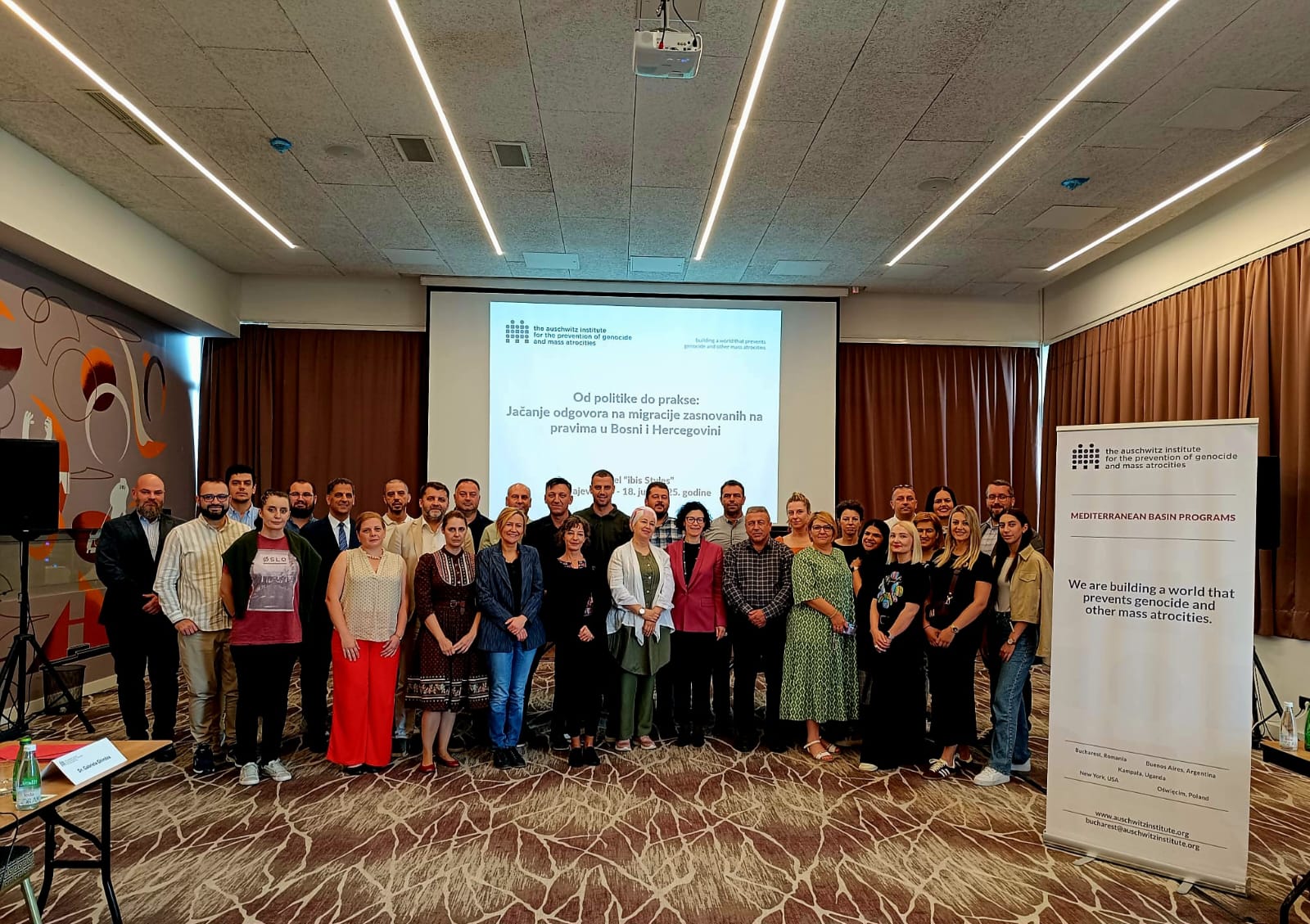
SRPP advances protection systems through research, training, and inclusive policy dialogue focused on legal identity barriers.
Short courses and national workshops convened government, academic, and civil society actors, while field engagement strengthened connections between institutions and affected communities.

Throughout 2025, SRPP completed preparatory work in Montenegro, including recruitment of local experts, adaptation of the 10-week online curriculum into BCMS, and coordination with regional partners.
The formal launch of programming, including online training delivery and a national in-person seminar, will take place in 2026. This expansion builds on lessons learned in Bosnia and Herzegovina and strengthens SRPP's presence across the Western Balkans.
Engagement with Moldovan institutional partners began in late 2025, including exploratory discussions with the Police Academy regarding formal collaboration.In 2026, SRPP will formalize this partnership through a Memorandum of Understanding and initiate prevention-oriented migration training within institutional curricula.
Moldova represents a strategic expansion into Eastern Europe, reinforcing law enforcement capacity to apply rights-based and prevention-sensitive approaches to migration governance.
Together, these 2026 launches—grounded in 2025 preparatory work—expand SRPP's multi-regional framework for prevention and protection in migration contexts.
Through these efforts, SRPP continues to build sustainable, rights-based protection systems that address risks early—before exclusion and identity-based violence escalate.
SRPP is advancing new prevention-oriented initiatives across the Americas to address emerging risks along key migration routes.
In Colombia, SRPP is developing a prevention framework focused on migrant and refugee women, girls, and LGBTIQ+ populations who face heightened risks of gender-based violence, exploitation, and exclusion.
The initiative will strengthen early warning and risk identification mechanisms, improve coordination between migration authorities and human rights institutions, integrate atrocity prevention tools into gender-responsive programming, and build local capacity to prevent identity-based violence before escalation.
By linking gender-based violence prevention with broader migration governance reform, SRPP aims to reinforce inclusive protection systems and reduce structural vulnerabilities affecting displaced communities.

